World Class Ecg
An ECG (electrocardiogram) is a test that records the electrical activity of the heart. It helps detect heart rhythm problems, heart attacks, and other cardiac conditions by showing how the heart beat...
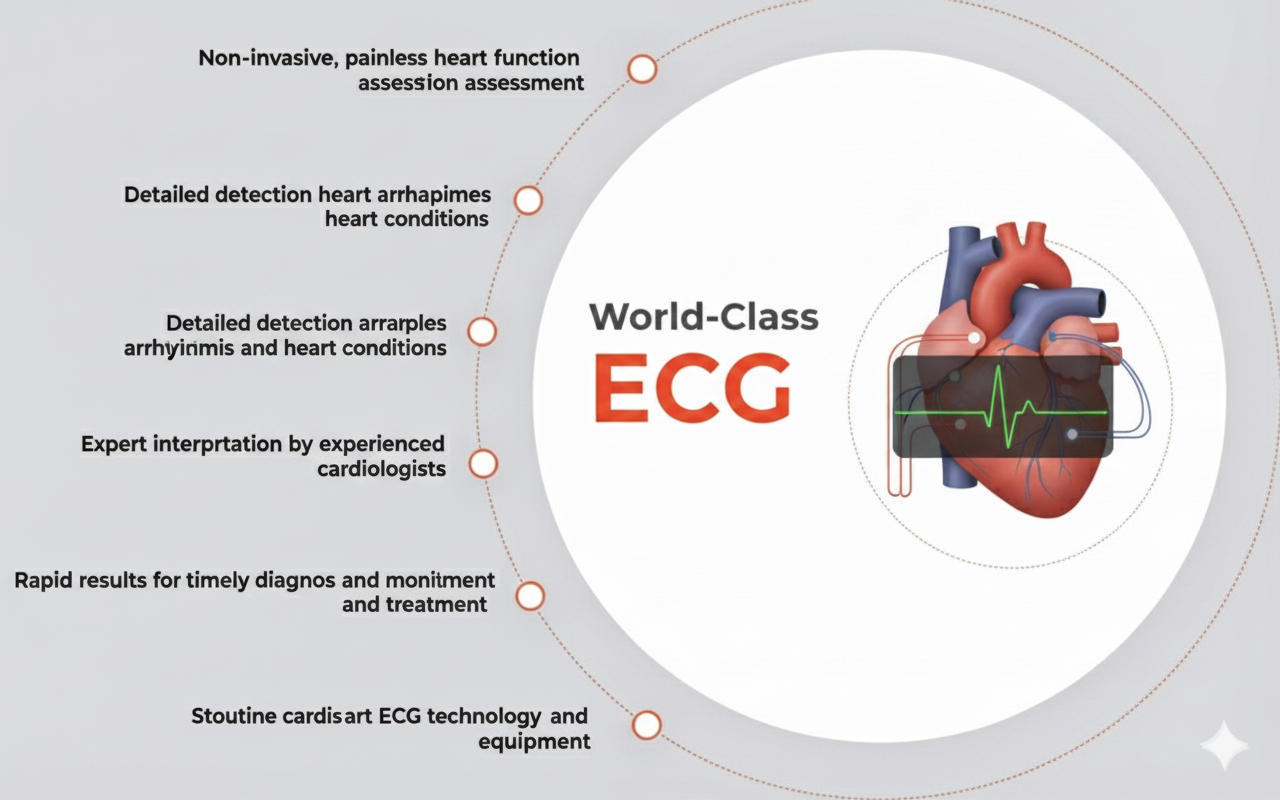
An ECG (electrocardiogram) is a test that records the electrical activity of the heart. It helps detect heart rhythm problems, heart attacks, and other cardiac conditions by showing how the heart beats and the timing of each heartbeat.


An ECG team is a group of trained healthcare professionals responsible for performing and interpreting electrocardiograms. The team typically includes ECG technicians and supervising clinicians who en
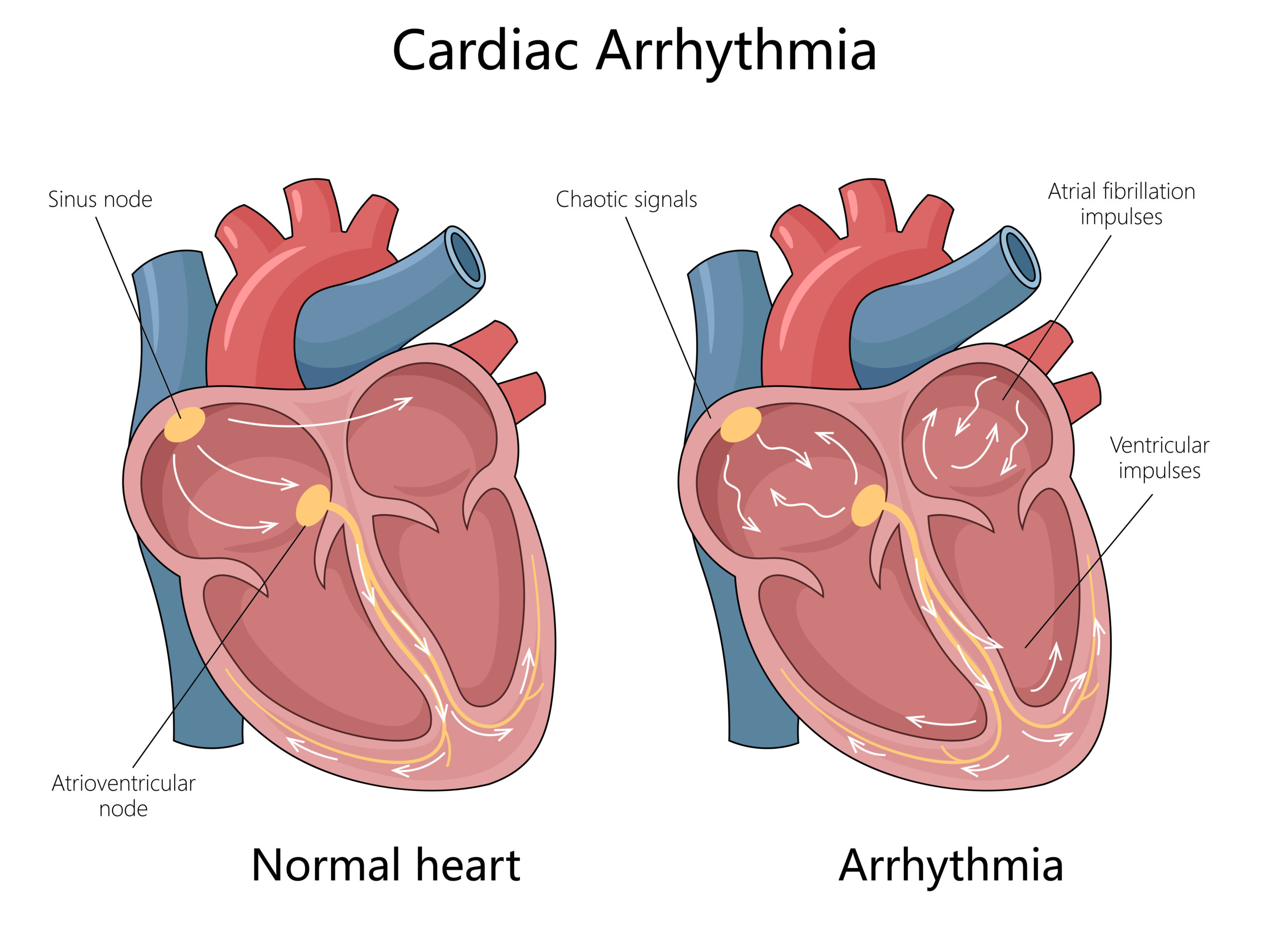
Depending on severity, treatments include medications (beta-blockers, anti-arrhythmic drugs), lifestyle changes, catheter ablation, or implantation of a pacemaker.
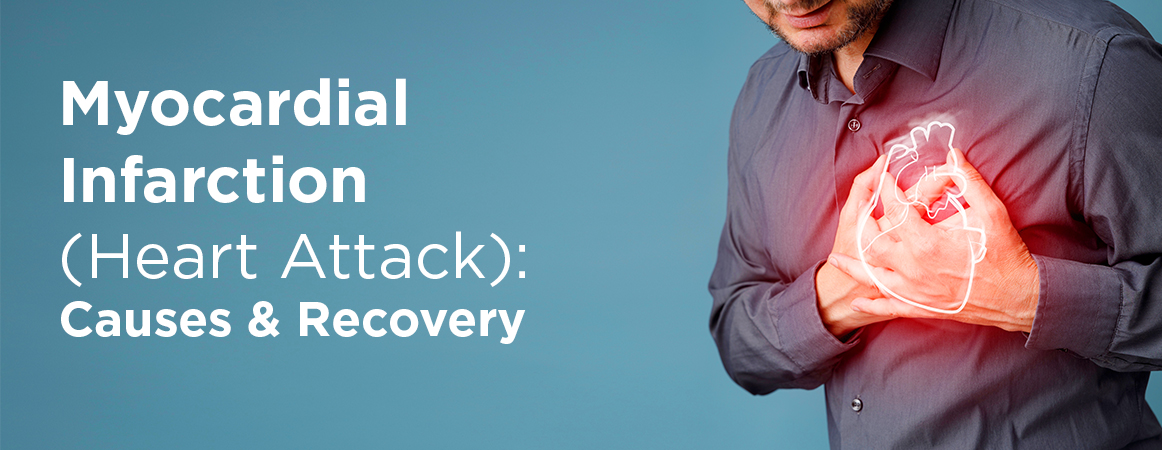
A heart attack happens when blood flow to part of the heart is blocked, damaging heart muscle. ECG helps identify the affected area and severity by detecting changes in heart electrical activity.
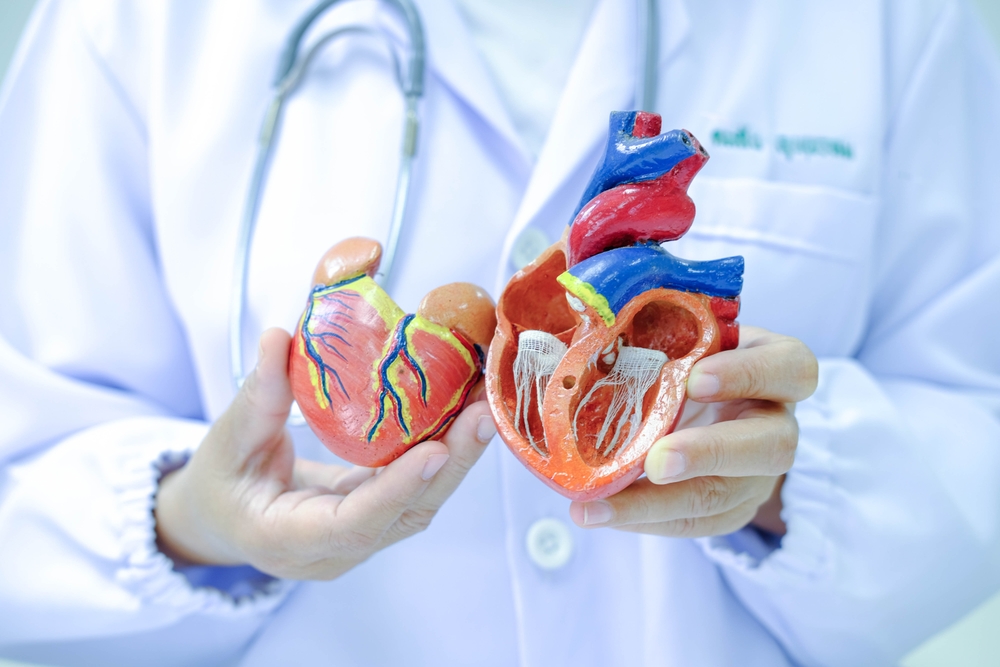
Lifestyle modifications, medications (nitrates, beta-blockers, statins), and procedures like angioplasty or coronary artery bypass surgery are used to restore proper blood flow.
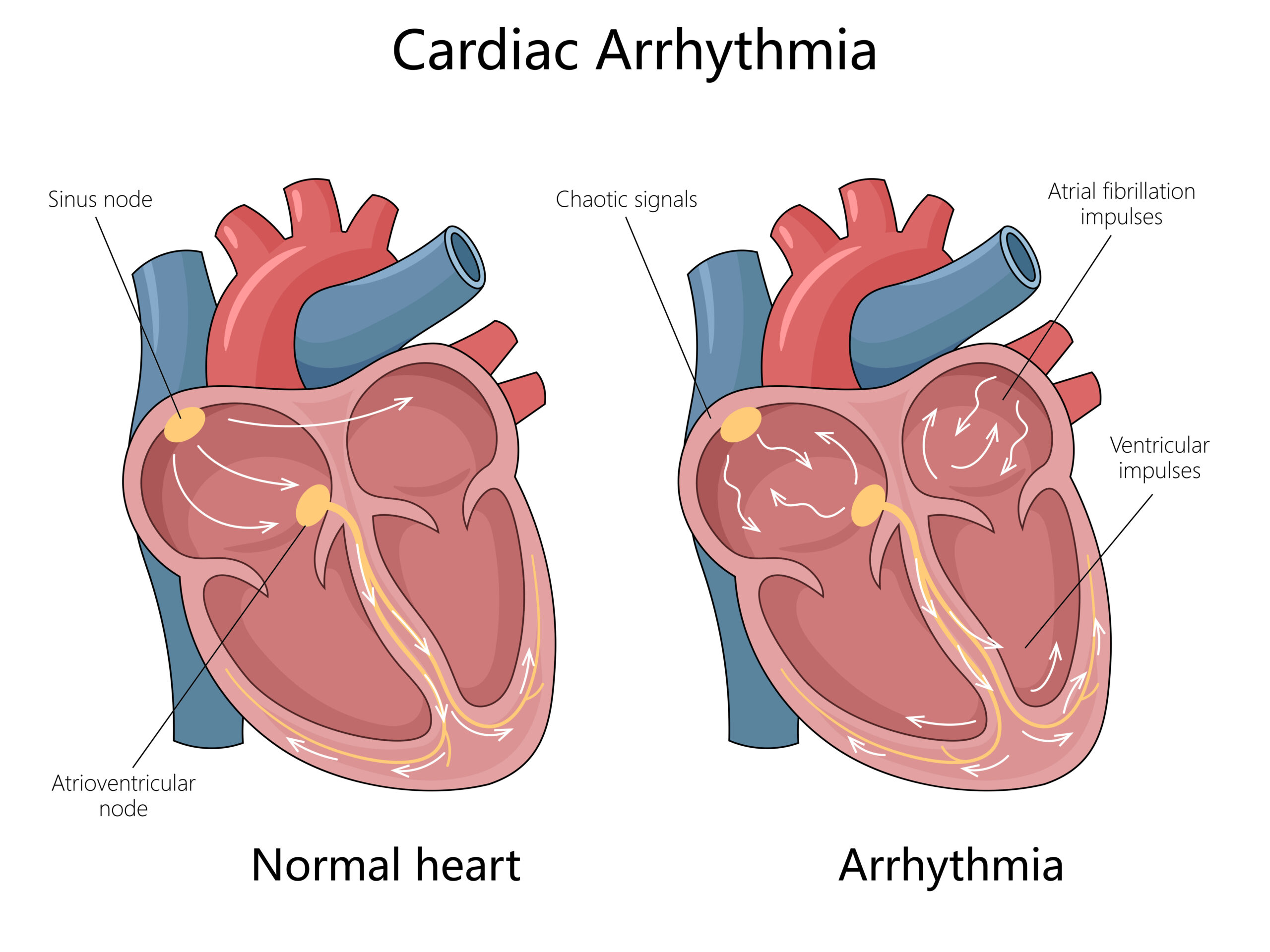
Arrhythmia occurs when the heart beats too fast, too slow, or irregularly. ECG detects abnormal heart rhythms, such as atrial fibrillation or ventricular tachycardia.
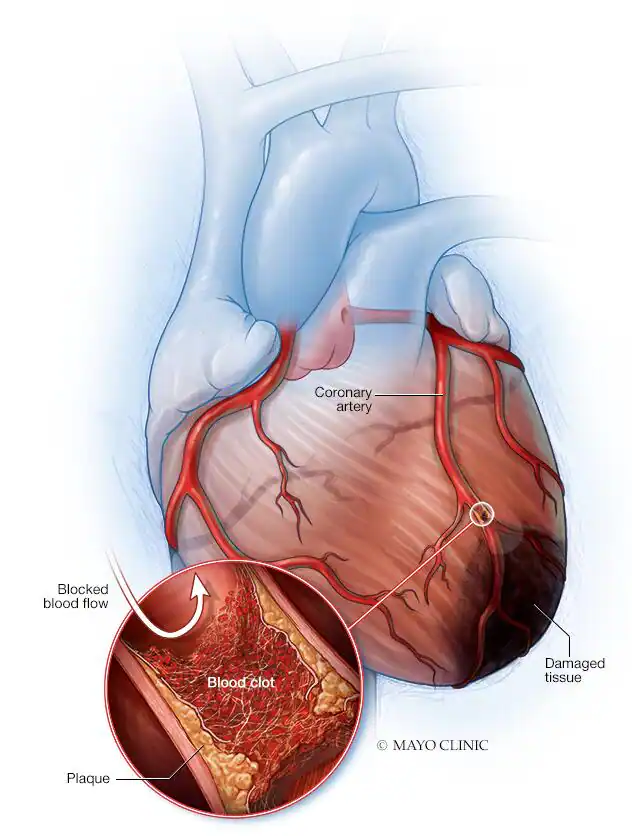
A heart attack happens when blood flow to part of the heart is blocked, damaging heart muscle. ECG helps identify the affected area and severity by detecting changes in heart electrical activity.
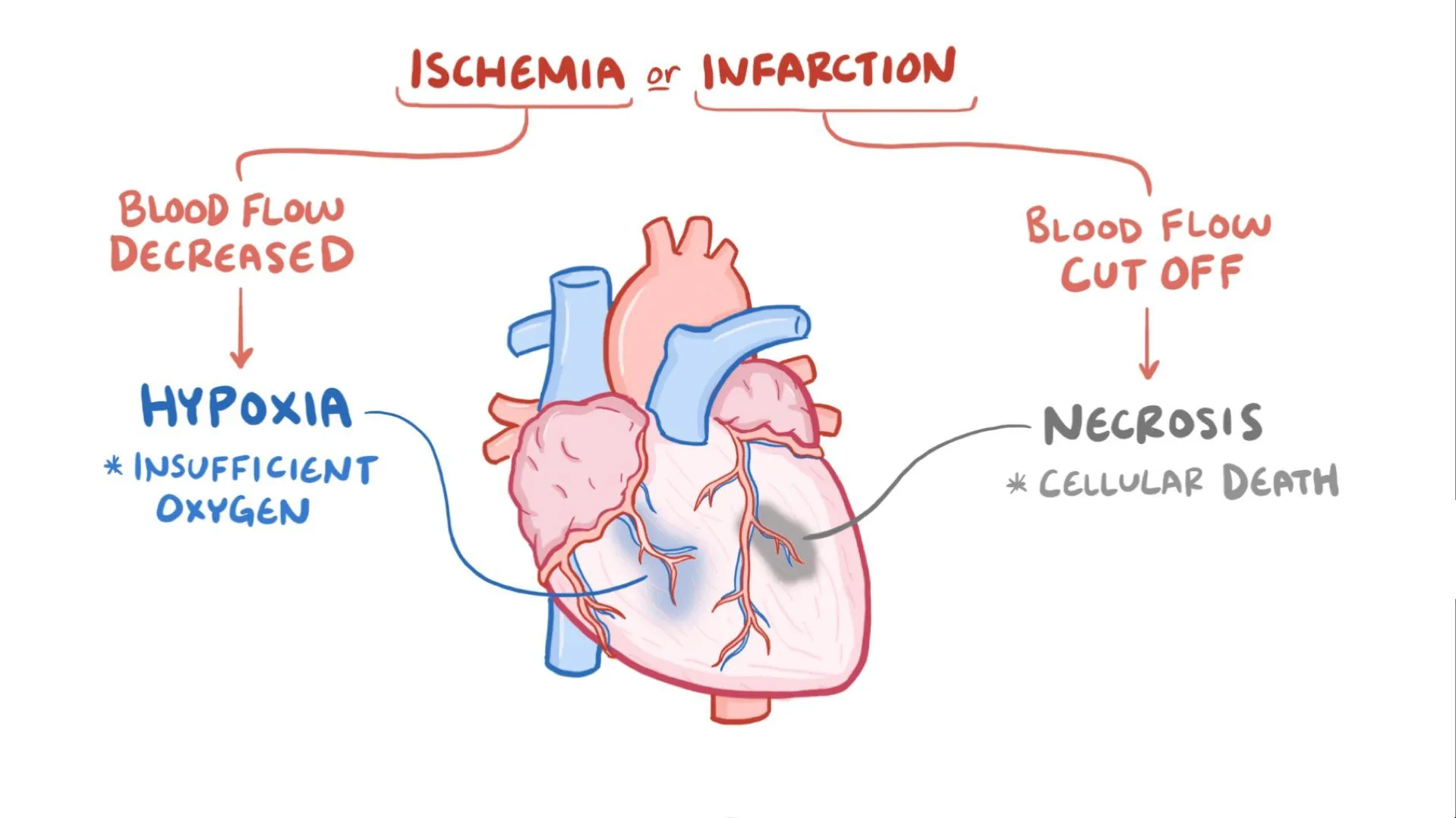
Ischemia occurs when the heart muscle receives insufficient oxygen-rich blood, often due to narrowed coronary arteries. ECG can detect patterns indicating reduced blood supply.




श्री टी.एन. झा

श्री अशोक सिंह

Grandmother

Mr. Maharaj Singh

Mr. P Sharma

Mr. Sudhir Gupta

Mr. M.J. Rehman
श्री टी.एन. झा
श्री अशोक सिंह
Grandmother
Mr. Maharaj Singh
Mr. P Sharma
Mr. Sudhir Gupta
Mr. M.J. Rehman
An ECG (electrocardiogram) is a test that records the electrical activity of the heart. It helps detect heart rhythm problems, heart attacks, and other cardiac conditions by showing how the heart beats and the timing of each heartbeat.
An ECG (electrocardiogram) is a test that records the electrical activity of the heart. It helps detect heart rhythm problems, heart attacks, and other cardiac conditions by showing how the heart beats and the timing of each heartbeat.

